

Announcing Your Engagement Without the Drama
Parents, family group chat, or Instagram first? Here’s how to announce your engagement strategically without hurting any...
Honest, humorous, and helpful: How to collect and share your wedding fails and wins—and build a community that truly supports.
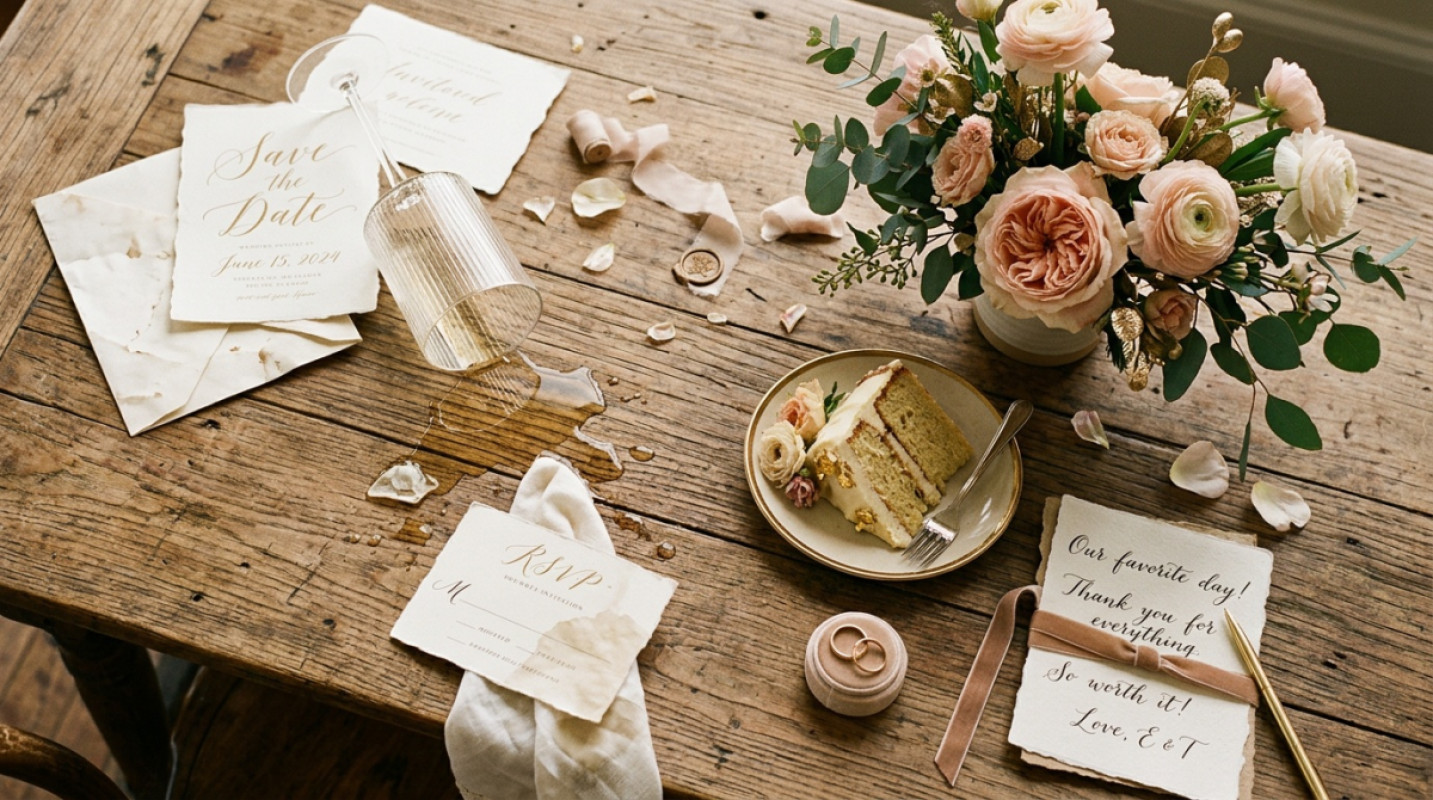
You’re planning your wedding and notice how quickly excitement turns into pressure. This is exactly where honesty and humor help. When we talk about small mishaps and big moments of joy, wedding planning becomes human, relatable, and easier. Wedding fails show that the unexpected happens—and often, those are the moments that stay with us. Wedding wins remind us why we’re doing this: for connection, joy, family, friends, and our community.
Stories don’t just preserve details—they capture the feeling. The rain at the registry office, the improvised microphone, the grandmother who took over the playlist during the aperitif—all of these become experiences that support you when to-do lists get overwhelming. For newly engaged couples, planners, and story lovers, hearing real stories makes planning feel more relaxed. And those who share realize that almost everyone has similar thoughts.
Start early. Create a place where everything lands: a note on your phone, a private folder in the cloud, or a shared chat. Use short formats that you’ll actually stick with.
When the big day arrives, think about questions for guests. A guestbook is nice, but targeted prompts have even more impact: “What was your favorite moment today?” “Which little fail made you laugh?” “Which song should we play again in ten years?” You can do this analog with cards at each table or digitally via a QR code leading to an anonymous form. This creates a chorus of voices that completes your story.
Sharing doesn’t mean giving everything away. Choose your space intentionally: a close-friends story, a small Telegram group, your couple newsletter, or a recycled photo folder from the wedding rehearsal. Decide which perspective you want to show: more behind-the-scenes or the final result, more humor or heart. Set your boundaries clearly: faces only with consent, intimate moments stay private. Honesty also means being allowed to say “stop.”
Instead of famous examples, here are the classics that keep popping up at weddings in the DACH region—and almost always become favorite anecdotes:
These patterns show: Humor turns fails into quotes you’ll repeat for years. And wins don’t have to be grand. Often, it’s the smallest gesture that sticks.
Your stories are invitations. When you share, you give others permission to be honest too. For planners, this creates valuable feedback: What really helps couples? What’s just pretty decor? For newly engaged couples, planning becomes a dialogue, not a test. This reduces pressure, strengthens your team spirit, and makes room for real decisions: less “How is it supposed to be done?” and more “What feels right for us?”
When you make sharing stories a natural part of your wedding planning, you gain twice over. You take the edge off expectations and create memories that can breathe. Fails become running gags, wins become quiet anchors. The best part? Both belong together. And that’s where your most beautiful, honest tradition lies.
Use simple prompts, keep the effort minimal, and offer choices: a card at their seat, a QR code, or a voice note. A quick thank-you at the microphone works too.
Give yourselves time. Share when it feels right. Humor helps, but boundaries matter. Some things are just for you—that’s completely okay.
Create folders: photos, videos, texts, audio. Don’t forget to name files with dates. A quick index in your notes keeps everything organized.
wedset.app helps you plan your dream wedding. From the guest list to the timeline - we have everything under control.
More ideas and experience for the planning ahead.
Parents, family group chat, or Instagram first? Here’s how to announce your engagement strategically without hurting any...

Did we forget something? This 12-point checklist will guide you relaxed through the final weeks before your wedding. For...
Constantly second-guessing decisions you’ve already made? Here’s how to break the decision loop in wedding planning.