

Münster Registry Office: Your Dream Wedding Date Is Drawn by Lottery
Why you don’t book your dream date at Münster Registry Office—you win it in a lottery. Plus: the truth about the colour-...
Key warning signs when choosing vendors—with examples, follow-up questions, and pro tips on contracts, post-calculation, and trusting your gut.
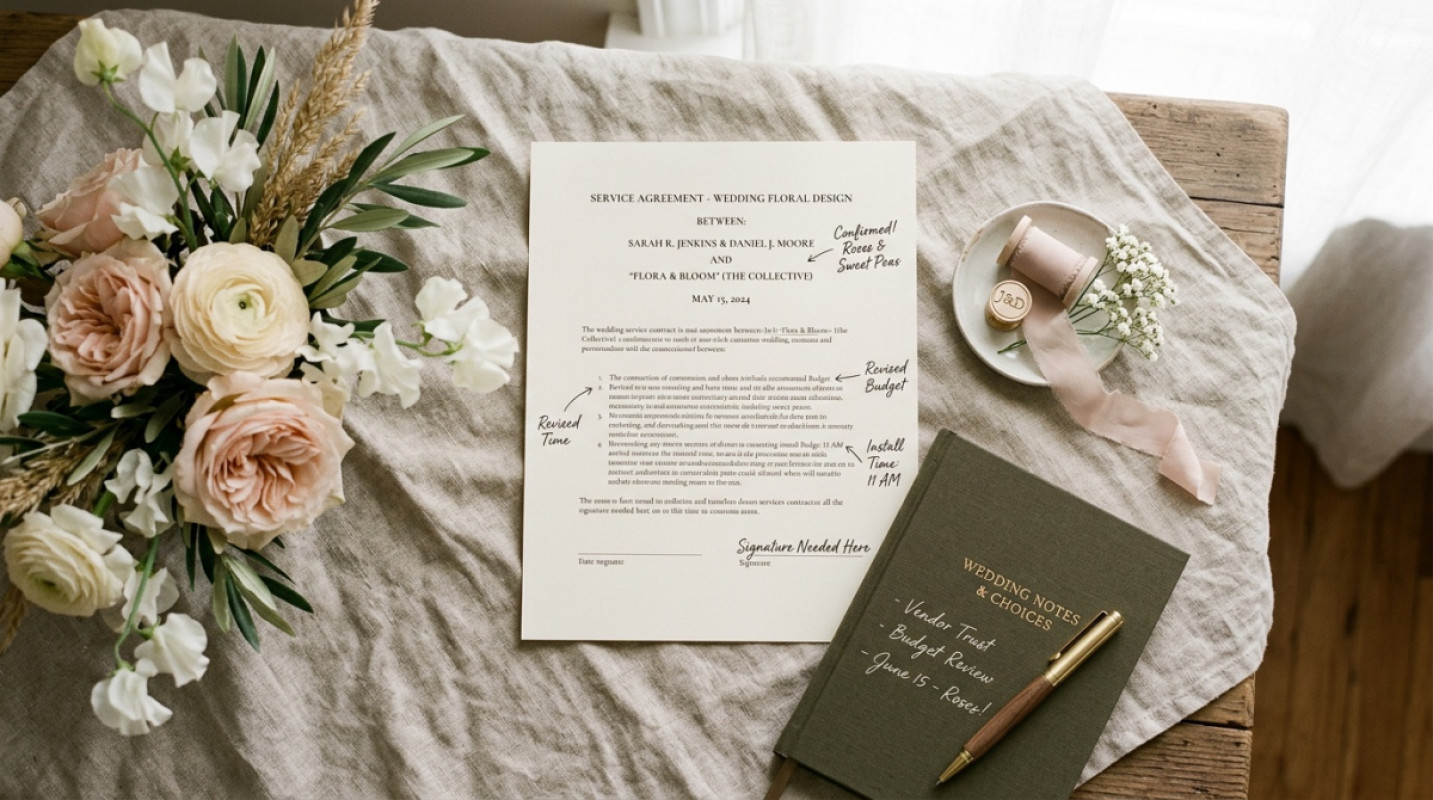
You’re making one of the most important team decisions of your life. Photography, music, florals, catering—everyone is part of a shared project. And like any good project, there are signs that show whether collaboration will succeed. Here are the warning signals experienced planners look for first—along with specific questions you can ask.
A friendly conversation isn’t enough. Without a contract, there’s no framework for quality, service, or accountability. It should at least outline the service package, point of contact, timeline, cancellation policy, and backup plan. Ask explicitly: What happens if someone gets sick? Who arranges a replacement? How quickly does the team respond, and under what terms?
Pro Tip: Request the final version via email before signing. Read it carefully, highlight questions, and ask for written clarifications. If someone doesn’t want to provide a contract, that’s a clear red flag.
You discussed the scope and price, but suddenly there are items you didn’t commission? That’s classic post-calculation without documentation. A professional approach includes a clear quote with a service description and changes confirmed in writing. Use terms like “scope of work,” “additional services,” and “acceptance.” Ask for examples: Which services count as extras? When is an additional hour billed? How is the deposit applied?
Stay in control: Keep a shared record (an email thread works) to document adjustments. A good vendor will suggest this themselves.
Website, Instagram, TikTok—look closely. A helpful pattern is consistency: style, color palette, imagery, and tone should be cohesive. Check if they show complete wedding reports or just individual shots. Ask for full galleries from a real wedding in a similar venue and season as yours.
Watch for stock photos or AI-generated images. Signs include unnaturally rendered hands or rings, distorted textures, or rooms that don’t exist. Use reverse image search to verify photos. Another plus: posts where venues and partners are tagged. This builds credibility and shows real teams working together.
You’re allowed to ask any question. Period. If someone dodges, stays vague, or only makes verbal promises, proceed with caution. Test the collaboration early in your initial meeting:
Think of it like a job interview: you’re assembling your team. Good professionals welcome structured questions, provide examples, and share references.
Sometimes your gut feeling speaks first. If appointments keep getting rescheduled, the tone doesn’t match your style, or you don’t feel seen, that’s a valid signal. Give yourself permission to politely decline and keep looking. It’s your day—and you deserve people who share your vision.
Transparent agreements protect your vision. Ask for contracts, trust your instincts, and vet presentations carefully. Use tools to bring order to your planning, like wedset’s Vendor Directory or a wedding website for communication and guest info.
Ask about the scope of work, backup plan, cancellation policy, response times, travel details, delivery formats (e.g., galleries, playlists), key contacts, and payment terms—including the deposit.
Look for unnatural details (hands, jewelry, typography), identical rooms across multiple accounts, and missing sequences. Request full galleries and use reverse image search.
A good contract outlines replacements and timelines. Ask upfront for a written emergency plan, contact chain, and process for quick decisions.
Yes, many vendors work with deposits. What matters are clear terms: What does the deposit cover, how is it applied, and what happens if the date changes?
wedset.app helps you plan your dream wedding. From the guest list to the timeline - we have everything under control.
More ideas and experience for the planning ahead.
Why you don’t book your dream date at Münster Registry Office—you win it in a lottery. Plus: the truth about the colour-...
Constantly second-guessing decisions you’ve already made? Here’s how to break the decision loop in wedding planning.

September in NRW is mild but chilly at night. Discover what tents, heating, and indoor backups cost—and when switching v...