
Münster Registry Office: Your Dream Wedding Date Is Drawn by Lottery
Why you don’t book your dream date at Münster Registry Office—you win it in a lottery. Plus: the truth about the colour-...
Unsure about your wedding size? These 7 questions will help you make the perfect choice for you and your loved ones!
You're sitting at the kitchen table, calendar open, Pinterest boards full. The real decision isn't number X or Y. It's the question: what kind of experience do you want to share with each other and with your favorite people. Once that's clear, the guest count almost guides you to the right format.
Start with three keywords that describe your celebration: for example 'closeness', 'lively', 'relaxed'. Decide which moments will be at the centre: the vows in a small circle, the big dance floor, a formal dinner, a laid-back aperitif (apéro). Write it down and prioritise. Everything else – including the guest count – arranges itself around that picture.
Imagine your guests as a community. Do you want to bring all generations together or focus on your closest circle? A practical approach is the three-circle model: inner core, extended circle, nice-to-have. Check how each level affects atmosphere, budget and logistics. A common split is also useful: a small civil ceremony and the big party later. That eases pressure on the guest list and keeps the day that matters most to you intimate.
Budget follows guest count. More people mean more seats, food, drinks, stationery, transport, staff. Estimate roughly per head and multiply, then plan deliberate buffers for photography, music and outfits. A small wedding can feel luxurious because you can focus on details. A large celebration can be budget-friendly if you set clear priorities, for example seasonal cuisine, reduced floristry and a well-thought-out schedule.
How do you feel with 120 pairs of eyes on you? Some love the stage and energy, others thrive in a circle of 30. Think about your everyday dynamics: big birthdays, family gatherings, festivals or weekends in a mountain hut. The right size matches your nature and gives you calm and presence on the day itself.
Listen around, but ask specific questions: What was the best moment? What would you do differently? How did guest numbers affect the mood? Don't be guided by highlight reels. Real insights come from honest hindsight – and they may differ from your path. What worked for others doesn't have to be yours.
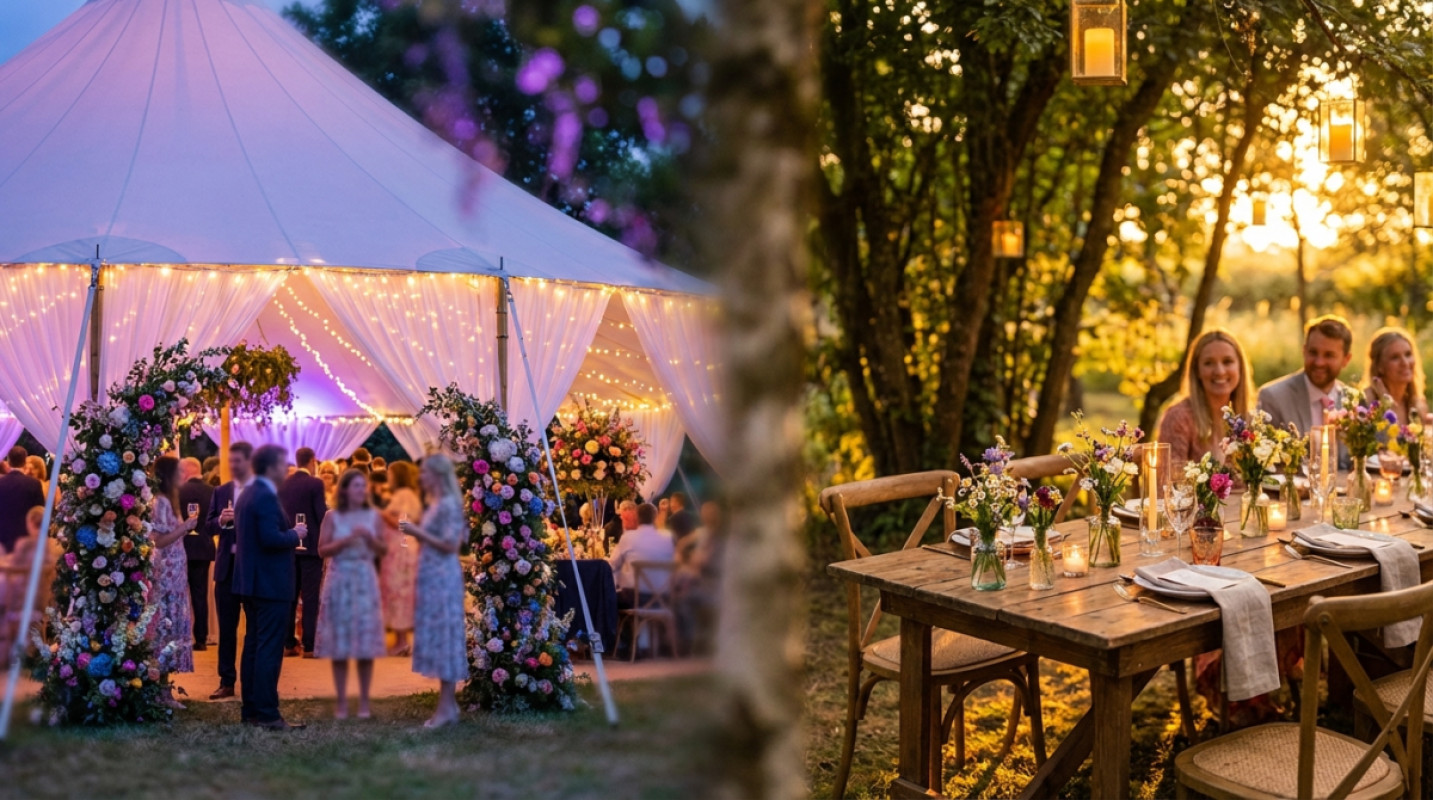
Spaces shape energy. A greenhouse with 40 seats feels like dinner at friends' place. A townhouse or a barn can easily hold 120 people and invite a long night of dancing. Pay attention to capacity, acoustics, weather, travel and overnight options – in the Alps maybe a hut with a shuttle, in the city a venue close to public transport. In Switzerland you can separate apéro and dinner. In Austria and Germany the combo of a civil ceremony, a symbolic outdoor ceremony and a late reception works very well.
Personality isn't a budget item, it's an attitude. Think about rituals that feel like you: a short personal vow line, a playlist from your years together, a signature drink with a little story, replacing a photo booth with a Polaroid wall, conversation cards at the table. At bigger events, zones help: a lounge to breathe, a quiet room for grandparents, a self-serve bar. In a small setting, handwritten place cards, a family-style dinner or a midnight snack from your region add charm.
Big doesn't automatically mean more festive. Small doesn't automatically mean more intimate. Right is what fits your values, your budget and your energy. If you feel outside expectations getting loud, a structured conversation between the two of you helps. Our tool for expectation management supports you here: Erwartungen klären. For a clear timeline and smooth logistics, see the guide Stressfreie Planung. Both help you decide on size not in isolation but in the bigger picture.
If you answer the seven questions honestly, the decision suddenly becomes easy. You'll see the contours of your celebration, feel the mood and know who you want around you on that day. That's what it's all about.
wedset.app helps you plan your dream wedding. From the guest list to the timeline - we have everything under control.
More ideas and experience for the planning ahead.
Why you don’t book your dream date at Münster Registry Office—you win it in a lottery. Plus: the truth about the colour-...
Constantly second-guessing decisions you’ve already made? Here’s how to break the decision loop in wedding planning.

September in NRW is mild but chilly at night. Discover what tents, heating, and indoor backups cost—and when switching v...