
Münster Registry Office: The Unwritten Rules
Insider tips for Münster Registry Office: the predecessor effect, the 30-minute rule, zoo weddings, and everything offic...
Overwhelmed by choosing songs for your wedding? You need fewer than you think. Here’s a relaxed guide based on your day’s flow.
You’re sitting together on the sofa, Spotify open, scrolling through a playlist titled “Wedding Vibes” for the third time. At some point, you look at each other and think: How can a single song even describe us? That’s exactly where most couples lose their heads. Not because they lack taste in music, but because they’ve misunderstood the task entirely.
Here’s the good news that will instantly take the pressure off: You don’t have to decide on the song. Your wedding consists of many small moments, and each one calls for a different mood. As soon as you stop searching for that one track that can do it all, music planning suddenly becomes relaxed.
Not every moment needs a hit. It’s the overall impression that counts, not the perfection of a single second.
Instead of staring at an empty playlist, first look at your day. When does what actually happen? These moments are your music slots—and there are surprisingly few of them. If you go through them one by one, you’ll never have to “score the entire wedding” at once, just one small moment at a time.
Here’s your framework:
See it? You really only need to carefully choose a handful of songs. The rest is atmosphere, and atmosphere can stay casual.
These are the most emotional seconds of the entire day, so they can be personal. Choose something for the processional that gives you a little lump in your throat when you hear it. It could be a classic, an acoustic version of your favorite song, or something instrumental. During the ceremony, one or two quiet pieces are enough, perhaps for the ring exchange. For the recessional, turn it up: a song that lets your joy burst out, because in that moment, you’ll just be grinning.
My tip: Listen to each of these songs at full volume once and imagine the moment. If you get goosebumps, the decision is made.
This is the phase where couples get most tangled up, yet it’s the most relaxed. During the champagne reception, people talk, laugh, and toast. No one is consciously listening to individual tracks. Instead of curating ten songs one by one, you’re looking for a mood: easy jazz, lounge, acoustic pop—whatever suits you. A playlist of about two hours runs in the background, and you’re done. What counts is the feeling in the room, not the order.
This is the only slot where a single song truly takes center stage. Choose something that has meaning for both of you, or something you feel comfortable dancing to. If a slow song feels too long, simply shorten it or pick a version that has a natural ending after three minutes.
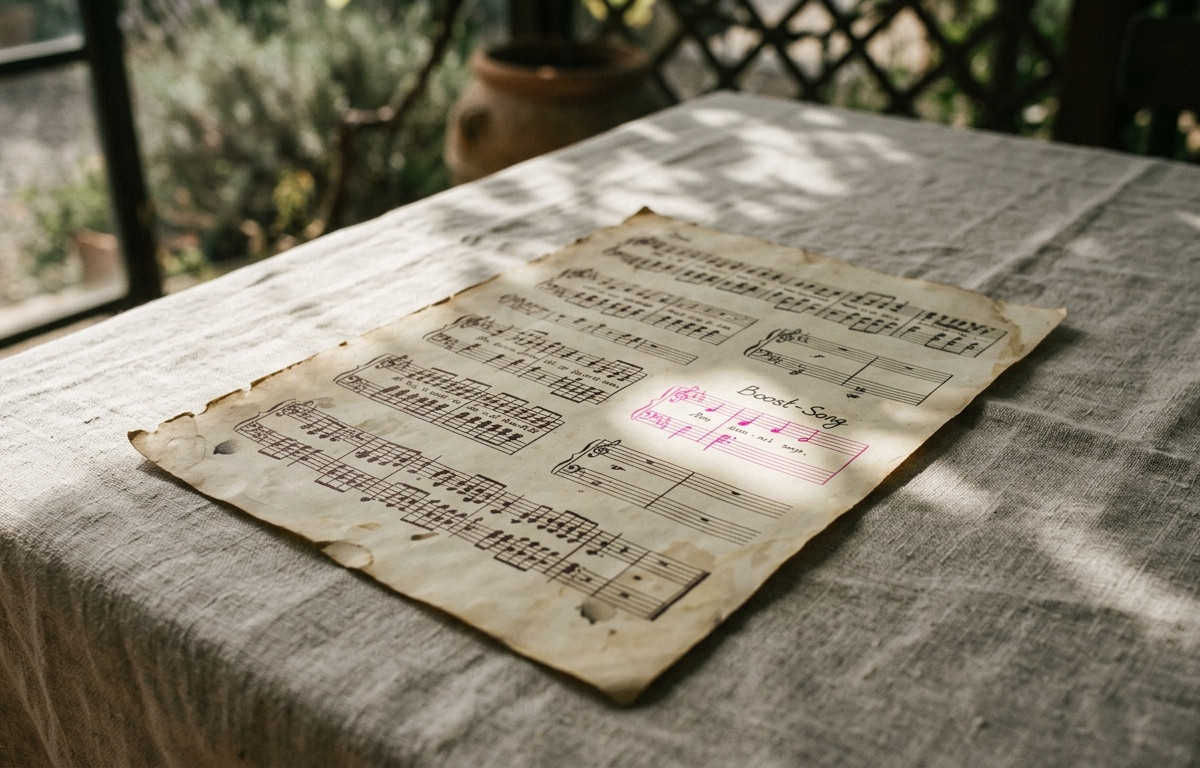
This is the most underestimated move of the entire evening. Right after your first dance, you play a song that gets the whole family and all your friends onto the dance floor. Something no one can sit still for. This one track often determines whether the party kicks off immediately or drags on for another twenty minutes. Choose it intentionally.
The boost song is the bridge between tears and the dance floor. Plan it deliberately, not by chance.
At this point, you don’t need to steer anything yourself. Either you have a DJ, to whom you give a short list of requests and a few no-gos, or you put together a longer playlist that just runs. Both work. The important thing is not to try to predetermine every song of the evening. Leave room for spontaneity, because the best party moments happen unplanned.
You don’t need a complicated setup. A shared playlist on Spotify or Apple Music is enough for both of you to add songs at the same time. Create a small folder for each phase so you never lose track. If you book a DJ, send them this structure instead of an endless wish list. Professionals love it when they know what energy each moment needs.
The same goes for your entire schedule: Once you have the flow clearly laid out, you can plan the music almost effortlessly. That’s exactly what you can use your wedding checklist for—just attach the music to the right spots.
No one at your celebration will count whether every song was a hundred percent perfect. What stays is the feeling: that everyone went quiet during the processional, that you only saw each other during the dance, that the dance floor was full. If you build the music along your day instead of searching for that one big hit, you’ll plan it in a relaxed afternoon instead of weeks of discussions.
Play your most important songs together beforehand, maybe while cooking or the evening before the big day. If you have to smile, you’ve done everything right.
You only need to carefully choose a small handful: one song each for the processional and recessional, one or two during the ceremony, one for the first dance, and a boost song afterward. The champagne reception and party run as a mood or via DJ/playlist.
This is the song played right after the first dance to get all guests onto the dance floor. It’s the bridge between the emotional dance moment and the party phase and often determines whether the mood kicks off immediately.
A playlist with the right mood is completely sufficient. During the champagne reception, no one consciously listens to individual tracks, so the atmosphere matters, not the order. About two hours of background music in your style is ideal.
Both work. A DJ can react to the mood and only needs a short wish list plus no-gos from you. Your own playlist gives you full control but should leave room for spontaneity and not plan every minute in advance.
wedset.app helps you plan your dream wedding. From the guest list to the timeline - we have everything under control.
Discover more helpful tips and ideas for your wedding
Insider tips for Münster Registry Office: the predecessor effect, the 30-minute rule, zoo weddings, and everything offic...
Wedding menu trends 2026: Hyper-personalization, farm-to-table, and interactive food experiences. Turn your meal into a...
Planning a Saturday wedding in a restaurant? Discover the real pitfalls and the checklist that will protect you from nas...