
Published on 21.02.2026

Cell Phone Ban at Weddings: Trend or Overreach?

No-phone policy at weddings: pros and cons, smart alternatives, wording for invitations and signs. How to communicate respectfully and with humor.
Guides & Tips Multi-Event Management Mittel (5-8 Min)
Smartphone ban at weddings: trend or overreach?

The Most Important:

  • Unplugged is not a dogma: Define your goal and choose a suitable, flexible Phone-Policy.
  • Communicate early, kindly, and clearly — with short text snippets for invitations and signs.
  • Offer alternatives: time slots, zones, Fotohub, and clear sharing rules for a relaxed atmosphere.

Why this topic matters right now

You’re planning a modern wedding and want your favorite people to truly be present. At the same time, you don’t want your First Look to hit social media first. Between presence, privacy, and anticipation lies the question: Do you need a phone ban — or are there more elegant ways?

Where does the “unplugged” idea come from?

Originally the impulse often came from photo and video teams: fewer screens in the aisle, no flashbulbs during the kiss, a clear view for professional shots. With social media and Reels a second motive has emerged: protecting privacy and curating a controlled story that fits you. Today we see both: strict phone bans during the ceremony and smart, flexible phone policies tailored to your day.

Good reasons to encourage phone restraint

  • Focus on the moment: When everyone’s eyes are up, the ceremony feels more intense. Your vows get the stage they deserve.
  • Privacy: You decide what goes online and when. This is especially important with sensitive guest constellations.
  • Better photos: Pros can work more calmly; you get emotions without phones in the front row.
  • Sound and flow: No ringtones, no distractions. Ceremonies run more smoothly.

Criticism: When does it feel patronizing?

A hard ban can sound strict. Some guests want to capture moments for themselves, others need their phone for accessibility — for example live transcription or hearing support. Generations also perceive rules differently. The balance works when you explain the “why,” specify exceptions, and offer a real alternative to snapping photos.

The smart middle ground: your phone policy

  • Time window: Unplugged only during the ceremony and speeches. Photos allowed from the recessional onward.
  • Zones: Ceremony unplugged, reception free. Or vice versa, depending on the venue.
  • Soft Share Rules: Posts only after your own first post. Provide a time or suggest the following day.
  • Photo hub instead of hashtag: A shared upload spot gathers all guest photos in good quality. The advantage: everything in one place, no algorithm stress. Use, for example, the Picture Hub.
  • Accessibility first: Communicate that assistive apps are allowed. This reduces pressure and is inclusive.

How to communicate calmly and clearly

  1. Early and friendly: Note it on the invitation and in the digital Guest List & RSVP. Briefly state your why, not just the ban.
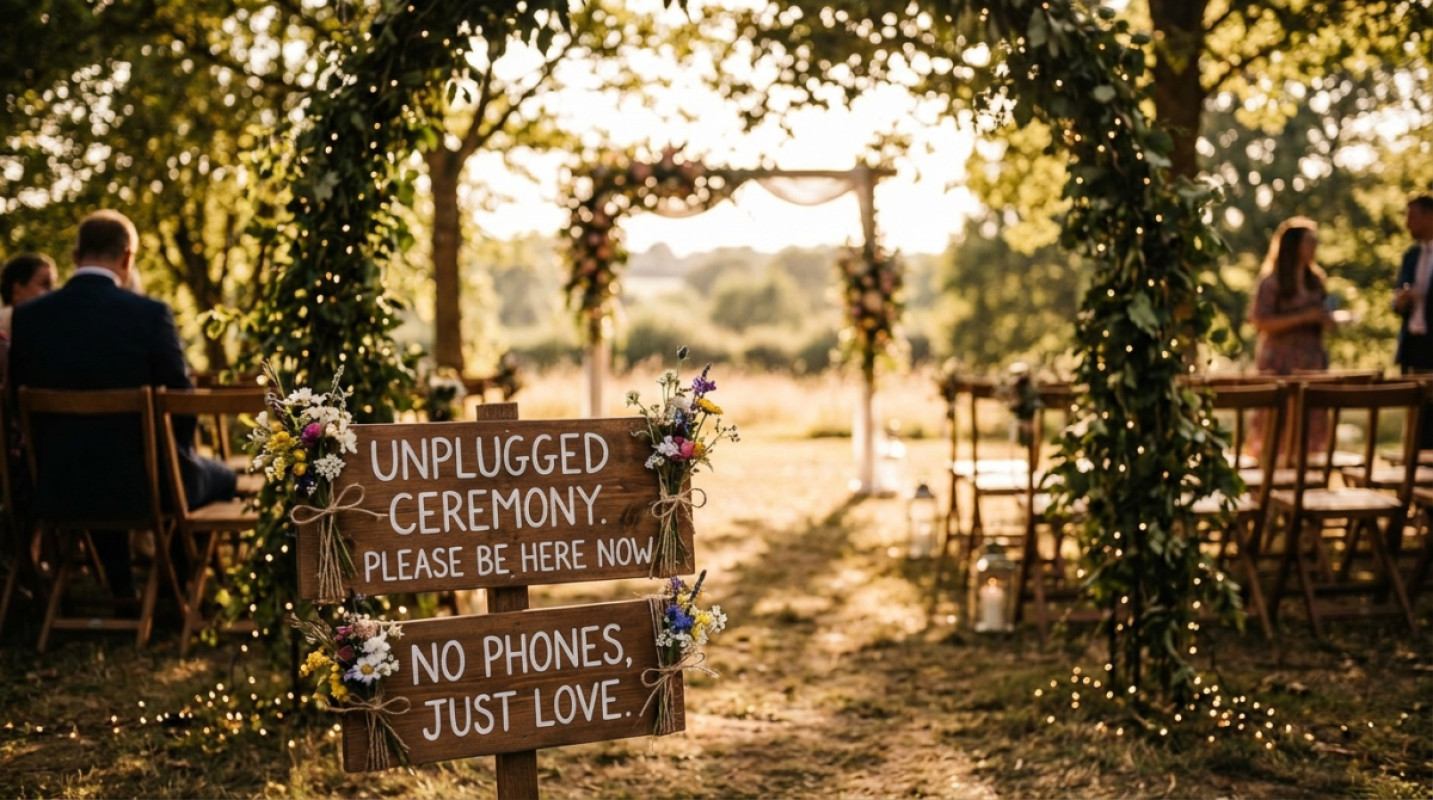
  2. Visible on-site: A beautiful sign at the entrance to the ceremony and a short, warm announcement by witnesses or the officiant.
  3. Offer an alternative: Point to the photo hub, the schedule, and your social posting rules.
  4. Firmness with heart: The team or your witnesses gently remind guests. No shaming, just a kind nudge.

Invitation copy: short, friendly, modern

  • “We would love full presence during the ceremony. Please no phones — photos welcome from the recessional.”
  • “Let’s feel together instead of filming. Ceremony unplugged, then go wild with cameras.”
  • “Private until the kiss: please post only after 8 PM. Thanks for joining in.”
  • “Accessibility matters: assistive apps are of course allowed.”

On-site signs: light but clear

  • “Unplugged during the ceremony. Afterwards we look forward to your perspectives.”
  • “Let the glow be in your eyes, not on the screen.”
  • “Posting? Starting tomorrow. Today we celebrate in the moment.”
  • “Do you need your phone for accessibility reasons? Of course yes.”

If you want to be firmer — always respectful

  • “Please no photos during the vows and the kiss. Our team will capture everything for you.”
  • “Thank you for giving us your eye contact. Cameras free from the recessional.”
  • “We will share our first photos ourselves. Afterwards your highlights are welcome.”

Implementation in three steps

  • Define your goal: Privacy, aesthetics, atmosphere — what is the priority? From that follows the policy.
  • Set the tools: Photo hub, signage, a short welcome moderation. Plan a 15-second script for the welcome.
  • Brief crew & family: Who will remind gently? Who helps guests with uploads or assistive apps?

Conclusion: presence over bans

A phone ban isn’t an end in itself. It’s about consciously experiencing and protecting your story. If you share your why, define time windows, and provide a good alternative with a photo hub, no one will feel patronized. Your day stays intimate, your guests stay relaxed, and the photos tell what truly matters.

Ready for your dream wedding?

wedset.app helps you plan your dream wedding. From the guest list to the timeline - we have everything under control.

Similar Articles

Discover more helpful tips and ideas for your wedding

>