

Engagement Party: Who Makes the First Guest List?
Who should you invite to your engagement party? Discover why this small celebration secretly shapes your wedding guest l...
Three celebrations, one hundred guests, thousands of data points: Why managing the guest list for multi-event weddings is more complex than you think. Honestly calculated.

Three celebrations, one hundred guests. That’s not one hundred decisions—it’s three hundred, and not a single one stays the same for eighteen months.
When you’re newly engaged, the guest list seems like the easiest task on your to-do list. Invite the people who matter. Done. That’s the trap. The guest list looks harmless because it disguises itself as a simple column of names. In reality, it’s the most dynamic, long-lasting, and error-prone project of your entire planning process. And no one warns you beforehand.
This article won’t give you ten tips for the perfect spreadsheet. It’ll show you something more honest: how many decisions are really behind it, why they constantly shift, and why your neatly formatted Excel will eventually let you down. Best to read this now, before the first cancellation arrives and you no longer have time to think.
Weddings today are rarely a single day. For many couples, it’s at least three occasions: the civil ceremony with a small group, the pre-wedding party, and the main celebration. Sometimes there’s also a champagne reception, an after-wedding brunch, or a separate outdoor ceremony at another location.
Each of these occasions has its own guest list. Your great-aunt attends the main celebration but not the pre-wedding party. Your best friends are there for everything. Colleagues only come to the big event. Here’s the thing: there isn’t one list. There are three, overlapping but never identical.
And that’s where the math starts.
Let’s take your one hundred guests. The first mistake: you imagine one hundred individual names. In reality, they’re rarely one hundred separate contacts. Couples live together, families share a mailbox. So, one hundred people roughly become sixty households you actually send things to and communicate with.
Sounds like a relief at first. It’s not. Because now comes the second layer.
Each person has their own status per event. Accepted, declined, or still uncertain. With three events, that’s already three hundred individual yes-no-maybe states you need to manage—whether in your head, on scraps of paper, or in a spreadsheet.
And the status is just one field among many. Per person, you also have:
One hundred guests aren’t one hundred names. They’re one hundred small databases that contradict each other.
Do the math: one hundred guests, three events, plus five to six variable data fields per person. You quickly end up with well over a thousand individual pieces of information that need to be correct at one point in time. And correct at one point in time is the real catch.
An engagement lasts twelve to eighteen months on average. Your one hundred guests’ lives don’t pause during that time just because you’re getting married.
Think about the realistic scenarios that are guaranteed to happen in a year and a half:
Breakups. The couple you invited together is suddenly no longer a couple. Does only one person come now? Both separately? Neither? One record becomes two—or none.
Moves. Between the save-the-date and the invitation, some guests will move. New address, sometimes a new phone number. If you send the invitation to the address you noted for the save-the-date, it’ll end up nowhere.
 Related read
Send Digital Save-the-Dates Stress-Free
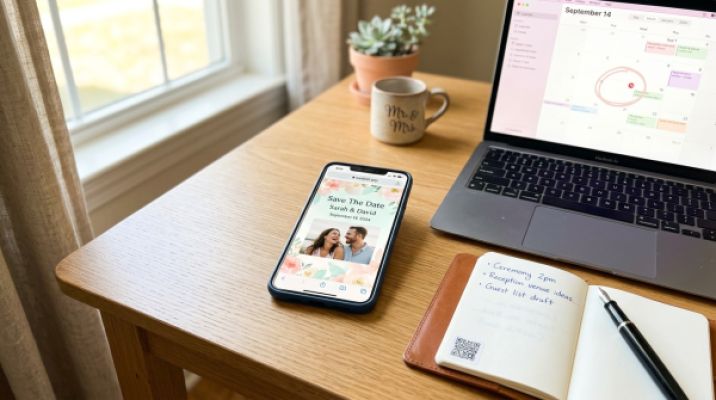
New feature from wedset.app: Send digital Save-the-Dates with one-click calendar integration, RSVPs, and a link that…
Read more
Related read
Send Digital Save-the-Dates Stress-Free
New feature from wedset.app: Send digital Save-the-Dates with one-click calendar integration, RSVPs, and a link that…
Read more
Pregnancies and babies. One guest becomes a family, or someone cancels last minute because the baby is due around your wedding week. Suddenly, you need a high chair you never planned for.
Last-minute cancellations. Illness, work commitments, a flu outbreak three days before. This happens at almost every wedding, and it hits when the numbers have already been reported to the venue.
If you think this through, you’ll realize there are three to four changes per person over the entire planning period. With one hundred guests, that adds up to several hundred individual updates—spread over eighteen months, often multiple times per week as the date approaches.
A spreadsheet can theoretically handle all of this. At first, it even works well. The problem isn’t the spreadsheet itself—it’s what happens when real life interferes.
Here are a few typical breaking points almost every couple experiences:
Duplicate entries. Someone moves, you quickly add a new row, and forget to delete the old one. Two weeks later, the same person appears twice with two different addresses. Which one is correct?
Outdated meal preferences. The vegetarian request from a year ago might no longer apply. You order based on the old information and end up with ten incorrect meals.
 Related read
Managing Meal Preferences for 80 Guests Without Spreadsheet Chaos
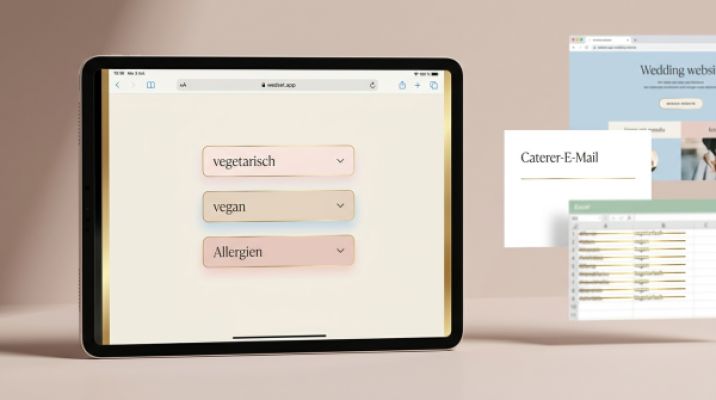
12 vegetarian, 3 vegan, 1 nut allergy, and 47 cousin notes like "no fish": Here’s how to track meal preferences for 80…
Read more
Related read
Managing Meal Preferences for 80 Guests Without Spreadsheet Chaos
12 vegetarian, 3 vegan, 1 nut allergy, and 47 cousin notes like "no fish": Here’s how to track meal preferences for 80…
Read more
Lost plus-one requests. Someone messages you on WhatsApp asking if their new partner can come. You say yes but never record it. A chair is missing from the seating plan.
Version chaos. One of you updates the spreadsheet on the laptop, while the other has an older copy on their phone. You work in parallel, and no one knows which file is the current one.
Then there’s the sheer time factor. Keeping the list manually up to date easily takes one to two hours per week during intense phases—just for updates, follow-ups, and corrections. That’s time you could be spending on the fun parts of planning.
And then there’s the psychological side no one accounts for. The moment you realize you’re losing track. You’re no longer sure who accepted. You don’t trust your own numbers. That nagging feeling that somewhere, a mistake is lurking is more exhausting than the work itself.
The honest question isn’t Which spreadsheet is best? It’s How do you keep track when everything constantly changes and you’re both working on the same data?
You need a place where a change is made once and is correct everywhere. Where both partners see the same status. Where a decline for the pre-wedding party doesn’t accidentally overwrite the acceptance for the main celebration. How you build this place is the next step, but the realization comes first.
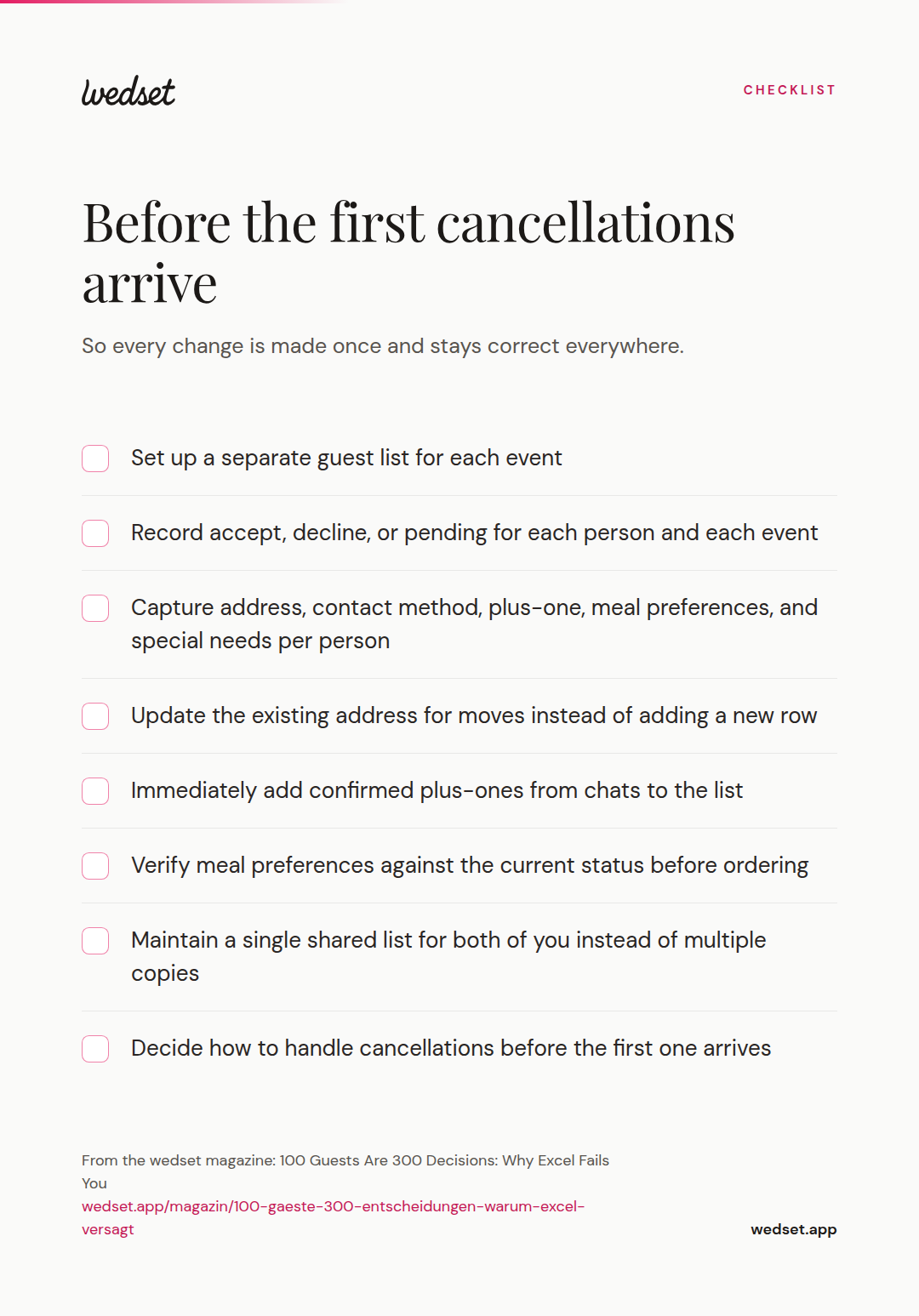
Checklist
So every change is made once and stays correct everywhere.
If you’re at the start of your planning, it’s worth setting this up early and cleanly instead of fixing it later. A good starting point is our series for newly engaged couples, and if you want to keep the structure simple to begin with, check out four easy tips for your guest list.
Guest List & RSVP Manage your guests, send invitations, and keep track of all responses. DiscoverThe guest list isn’t an administrative side task you can knock out on a Sunday afternoon. It’s a living project that accompanies you from the engagement to the day after the wedding, constantly evolving and growing more complex with each event.
The good news? If you understand this now, you’re ahead of most couples. You know that one hundred guests mean three hundred status fields and thousands of data points. You know these numbers move. And you can decide how to handle it while you still have the time and clarity to do so.
Before the first cancellations arrive, figure out how you’ll manage them. That’s the one decision that makes the other three hundred easier.
Basically, one per occasion. For the civil ceremony, pre-wedding party, and main celebration, that’s three separate lists that overlap but are never identical. Not every guest attends every event, so each celebration needs its own acceptance status per person.
Excel works well at first but breaks down when data constantly changes and both partners work on it simultaneously. Typical issues include duplicate entries after moves, outdated meal preferences, lost plus-one requests, and version chaos between multiple copies of the file.
Realistically, three to four times per person over the entire engagement period of twelve to eighteen months. Causes include breakups, moves, pregnancies, and last-minute cancellations. With one hundred guests, this adds up to several hundred individual updates.
As early as possible, ideally in the first few months after getting engaged. That way, you have time to set up the structure cleanly instead of fixing it later in the middle of planning stress. A well-maintained list early on saves you from double orders and seating chaos.
wedset.app helps you plan your dream wedding. From the guest list to the timeline - we have everything under control.
More ideas and experience for the planning ahead.
Who should you invite to your engagement party? Discover why this small celebration secretly shapes your wedding guest l...

Sent out a PDF invitation but still dealing with RSVP chaos? Discover how your guests really think and how digital invit...
Constantly second-guessing decisions you’ve already made? Here’s how to break the decision loop in wedding planning.