

Double-Barreled Surnames in 2025: What the Change Means for Couples
Since May 2025, both of you can share the same double-barreled surname. Learn what the new rules mean, what’s final, and...
A civil ceremony doesn’t replace the registry office. Here’s how to smartly plan both dates in Münster & Dortmund—without logistical chaos. Plus real venue tips.

Imagine this: You’ve booked a barn, found an officiant who’ll bring you to tears, and invited 90 guests. Three weeks before the big day, an aunt casually asks where the registry office is. Suddenly, it hits you—you’ve planned the most beautiful ceremony of your life but completely forgotten the legal part.
This scenario happens more often than you’d think, especially for newly engaged couples navigating the German wedding jungle for the first time. That’s why we’re breaking it down calmly here—what a civil ceremony can do, what it can’t, and why, in Münster, Dortmund, and the surrounding area, you’ll most likely need both. Don’t panic: With the right planning, it’s not a logistical nightmare but actually a pretty elegant solution.
Let’s start with the myth that causes most of the mishaps. The registry office is necessary because a civil ceremony alone isn’t legally binding. This isn’t a minor detail—it’s the golden rule. You’ll find the legal basis in the German Civil Code, specifically § 1310 BGB. It states clearly: A marriage in Germany is only valid if entered into in person before a registrar.
So, a civil ceremony isn’t a replacement—it’s something entirely different. The difference between a registry office wedding and a civil ceremony is this: one is legal, the other emotional. The registry office handles everything that matters on paper. A registry office wedding establishes the legal marriage with all its implications for tax law, inheritance law, social security, and family law. The civil ceremony, on the other hand, is the moment you’ll remember in twenty years.
One ceremony is legal, the other emotional. Together, they form the foundation and the celebration of your love.
The beautiful part? You don’t have to choose. Many couples today opt for both: a short, formal ceremony at the registry office and a personal, free ceremony surrounded by their guests. Legal security and big emotions—both get their moment.
Here’s where logistics come into play. In Münster, for example, registration and the ceremony are spatially separated. Marriages are registered and solemnized at the Münster Registry Office. However, both take place at different locations. To register, you must go to Stadthaus 1 on Klemensstraße, right in the city center. Unless you’ve planned an ambiance ceremony, the wedding itself takes place at the branch office, the Lotharinger Kloster on Hörsterstraße.
So, if you’re getting married in the classic wedding hall and then celebrating a civil ceremony at a manor, you’ll quickly have two or three stops in one day. This is where the clever Münsterland move comes in: venues that can handle both under one roof.
The region has a real advantage: many historic farms and castles are licensed as wedding venues and offer space for the civil celebration. The prime example lies just outside the city. Burg Hülshoff between Roxel and Havixbeck is the best example. After the ceremony, the wedding reception can take place right here. The special part? In historic rooms, the castle chapel, and the beautiful park, both civil and free ceremonies can be held.
Even within Münster, it’s more atmospheric than you might think. You can say your vows at the Lotharinger Kloster or the Gräftenhof on the grounds of the Mühlenhof Open-Air Museum. The Gräftenhof is a hidden gem for double dates because it includes space for the celebration. The threshing floor holds up to 150 guests, and for welcome drinks, the grounds by the post mill are perfect in good weather. And if you want to stay put after the ceremony: that’s possible here too.
The trick with venue booking is always the same: Ask specifically whether the registrar is allowed to officiate at the same location and whether the civil ceremony and reception can take place there. Also, clarify three things in writing: an indoor backup for rain, enough buffer time between program points, and whether there’s a plan for guests if things get delayed.
There are two schools of thought, and both work. The first: everything on one day, at the same place. The second, preferred by many pros: move the registry office up.
Many couples choose to have the registry office wedding before the civil ceremony. By doing the legal ceremony first, you’re already recognized as a married couple. This means you can focus entirely on the emotional and personal experience during the civil ceremony without worrying about legal formalities. In practice, this often means: a small, intimate date in the wedding room a few days beforehand, just with witnesses, and then the full show on the big day without bureaucratic stress.
If you want both on the same day, plan generously. A registry office wedding is mercifully quick. The registry office ceremony at Lotharinger Kloster takes about 20 to 30 minutes. The civil ceremony, on the other hand, should breathe—it follows no schedule and lives off your story. Plan shuttles or a central venue so your guests don’t have to commute between three addresses, and talk to your photographer early about transitions. Smooth switches between ceremonies are purely a matter of preparation.
Wedding Checklist Stay on top of every task with your personalized wedding checklist. DiscoverTwo things you should take seriously in Münsterland. First, the weather. For outdoor ceremonies at a manor or barn, a weather clause in the contract is worth its weight in gold—meaning the written guarantee that you can move indoors in case of rain without extra costs. Ask about this actively before signing.
Second, the season. Popular dates disappear fast. Reservations should be made early, ideally 6 to 12 months in advance. Particularly popular dates in the summer months and on weekends are booked up quickly. At the same time, there’s a deadline you need to know: The registration is valid for 6 months, meaning you can get married within six months of registering. Practical consolation for spontaneous couples: If you don’t have a specific date in mind, there are often last-minute openings.
For your officiant, it’s worth choosing someone with a real Münsterland connection who knows the venues and the routes. Unlike church or registry office weddings, you’re responsible for finding an officiant and a suitable venue. That’s effort, but also freedom.
Let’s talk money because many underestimate this. The registry office is the budget-friendly part. In Münster, for example: Registering the marriage costs 72 euros. The first marriage certificate costs 15 euros, and each additional copy is 9 euros. Add weekend surcharges, and you’re realistically looking at a mid-to-high double-digit or low triple-digit sum.
The civil ceremony is the bigger expense, but it’s also completely customizable. For the registry office, you’ll pay between 50 and 150 euros depending on the region, while a professional officiant can easily cost 800 to 1500 euros. The best way to save is on the venue, not the officiant. A central location that can handle both saves shuttle costs, double decor, and nerves.
Ready to plan your wedding?
Get started for free with wedset.app — your digital wedding planner.
Can the civil ceremony take place before the registry office? Yes. It’s common to marry at the registry office first and then have the civil ceremony. But it’s entirely possible to switch the order. You can also have your emotional and personal ceremony first and then make the marriage legally binding.
What about getting married abroad? The emotional celebration, yes—the legal side, you’ll handle at home afterward. If you want to celebrate your wedding abroad, stay relaxed. Enjoy your civil ceremony on the beach, at a finca, or at your dream location. Once you’re back home, you can register your marriage.
Does it have to be a professional? No, but it makes a difference. If a family member or friend gives the speech and you get married in your own garden, the ceremony can be very affordable. But if you hire a professional officiant and rent a venue, it’ll naturally be more expensive.
The civil ceremony is the heartbeat of your day; the registry office is the foundation. For many couples, both together make the perfect combination of duty and celebration. If you only do one, you’re missing either the emotion or the legal security.
The only real mistake is forgetting the bureaucratic part or leaving it too late. Plan early, book a venue that can handle both, secure a weather clause, and schedule the registry office date so your big day stays relaxed. Then, what was once a dreaded double date becomes exactly what it should be: two “I dos,” one perfectly planned celebration.
No. A marriage in Germany is only valid under § 1310 BGB if entered into before a registrar. A civil ceremony is emotionally significant but not legally binding. For an official marriage, you need both dates.
Yes, in Münsterland. Venues like Burg Hülshoff near Havixbeck or the Gräftenhof at the Mühlenhof Open-Air Museum in Münster allow both registry office weddings and civil ceremonies, with space for the reception afterward. When booking, ask specifically whether the registrar is permitted to officiate there.
Ideally 6 to 12 months ahead, especially for summer and weekend dates. Note: The marriage registration is valid for six months, so you must marry within that timeframe.
The registry office is the budget-friendly part—registration in Münster costs around 72 euros plus fees for certificates and weekend surcharges. A professional officiant typically costs between 800 and 1500 euros, depending on the region and effort.
Many couples opt to do the registry office first, often in a small circle a few days beforehand. That way, you’re legally married by the big day and can enjoy the civil ceremony without bureaucratic stress. The reverse order is also possible.
More ideas and experience for the planning ahead.
Since May 2025, both of you can share the same double-barreled surname. Learn what the new rules mean, what’s final, and...
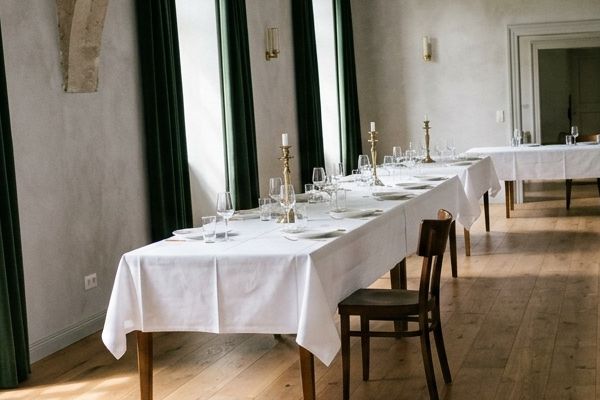
Getting married in NRW in 2027? The top Saturdays in the Münsterland are already gone. Find out what’s still available,...
Why you don’t book your dream date at Münster Registry Office—you win it in a lottery. Plus: the truth about the colour-...